
| Minimum Software Version | 8.16.0 |
| Solution(s) | Cases International ✓ Cases US ✓ Institutions ✓ Counsel ✓ |
Explains how to create a custom ID metadata field to assign unique Bates or exhibit numbers to document pages, and how to apply that field to documents and stamps.
When exchanging discovery with opposing counsel, or creating bundles for court, you may have court-mandated requirements for page numbering. By setting up a custom ID metadata field, you can assign a unique Bates or exhibit number to each page of a document, making it easier to track and locate specific pages across a bundle.
Adding a Bates or exhibit number to each page of a document provides a unique numeric identifier per page, which is a common requirement in litigation. A custom ID field lets you reserve a range of values across a document's pages and optionally surface those values in stamps applied to the document. For example, a document with two pages will automatically reserve two consecutive values, while a single-page document reserves one — ensuring numbering remains continuous across the bundle.
Creating a custom ID field
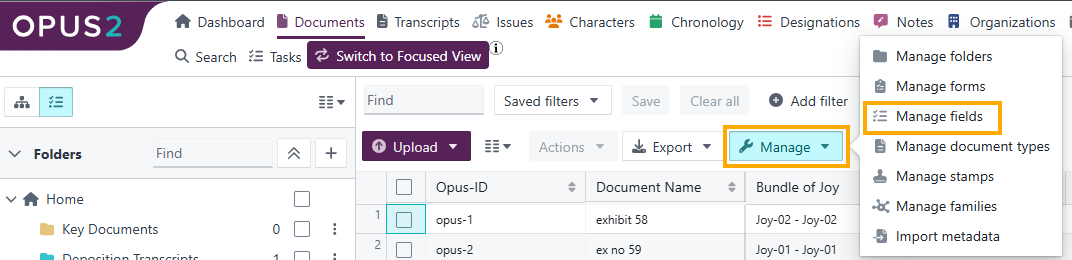
- From the Documents page, select Manage > Manage fields.
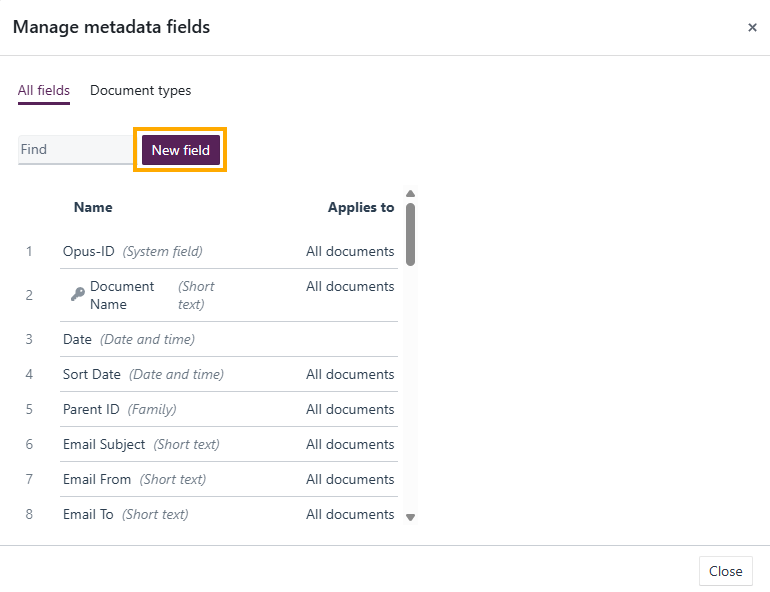
- In the Manage metadata fields dialog, select New field to open the field properties on the right-hand side.
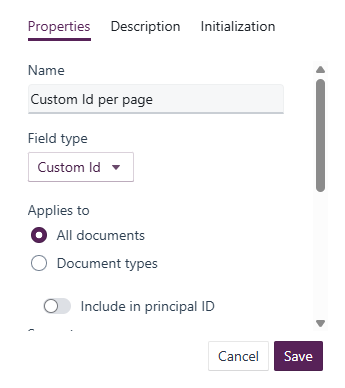
- Complete the field properties as follows:
- Name: Enter a name i.e:
Custom Id per page. - Field type: Select Custom Id from the list.
- Applies to: Select All documents or a specific document type.
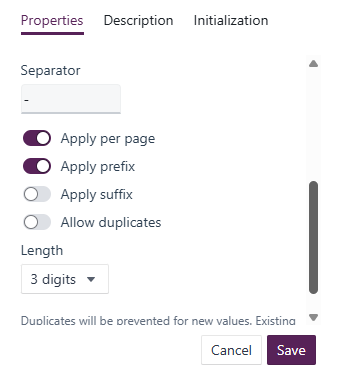
- Separator: Enter a hyphen, or your preferred separator character.
- Apply per page: Toggle to ON.
- Length: Select 3 digits, or choose a value between 1 and 8.
- Name: Enter a name i.e:
- Select Save, then Close.
The new field appears on the Documents page.
Applying the custom ID field to documents
Multiple documents
- Select the documents using the checkboxes.
- Select Actions > Apply metadata.
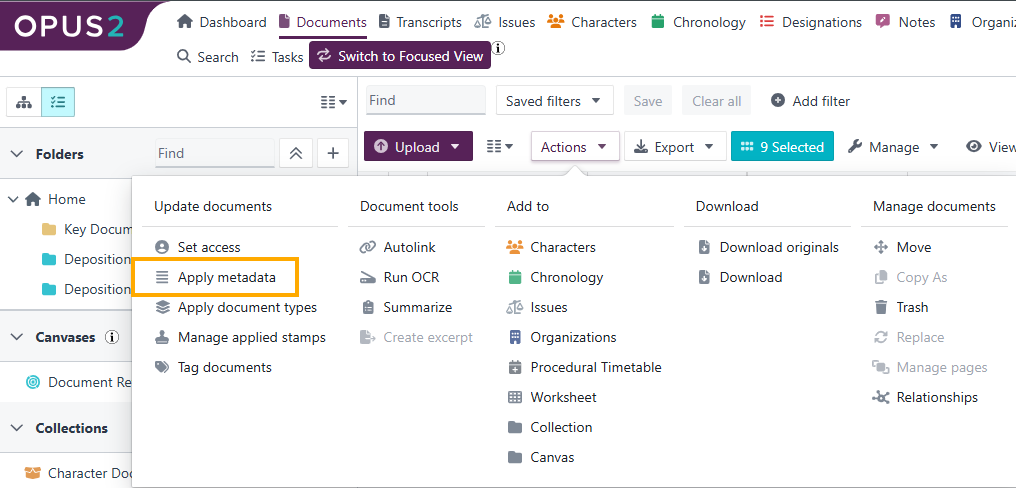
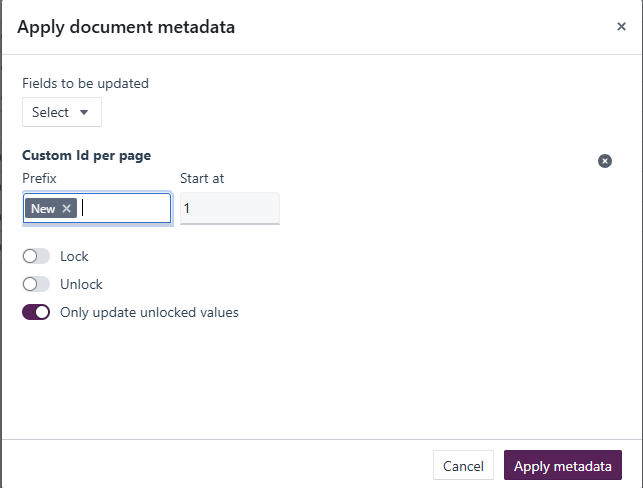
- Under Field to be updated, select Custom Id per page.
- Add a new prefix or search for an existing one (for example,
New 2). - Select Apply metadata.
The selected documents are updated with the new prefix. For example, a document previously showing New 1-001 will update to New 2-001. Values are reserved per page, so a two-page document will reserve two consecutive values (for example, New-004 and New-005), while a single-page document reserves one (for example, New-001).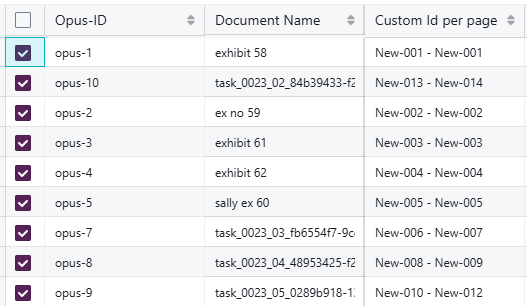
Single document
- Open the document and navigate to the Details pane.
- Enter a new prefix or search for an existing one in the custom ID field.
- Select Save.
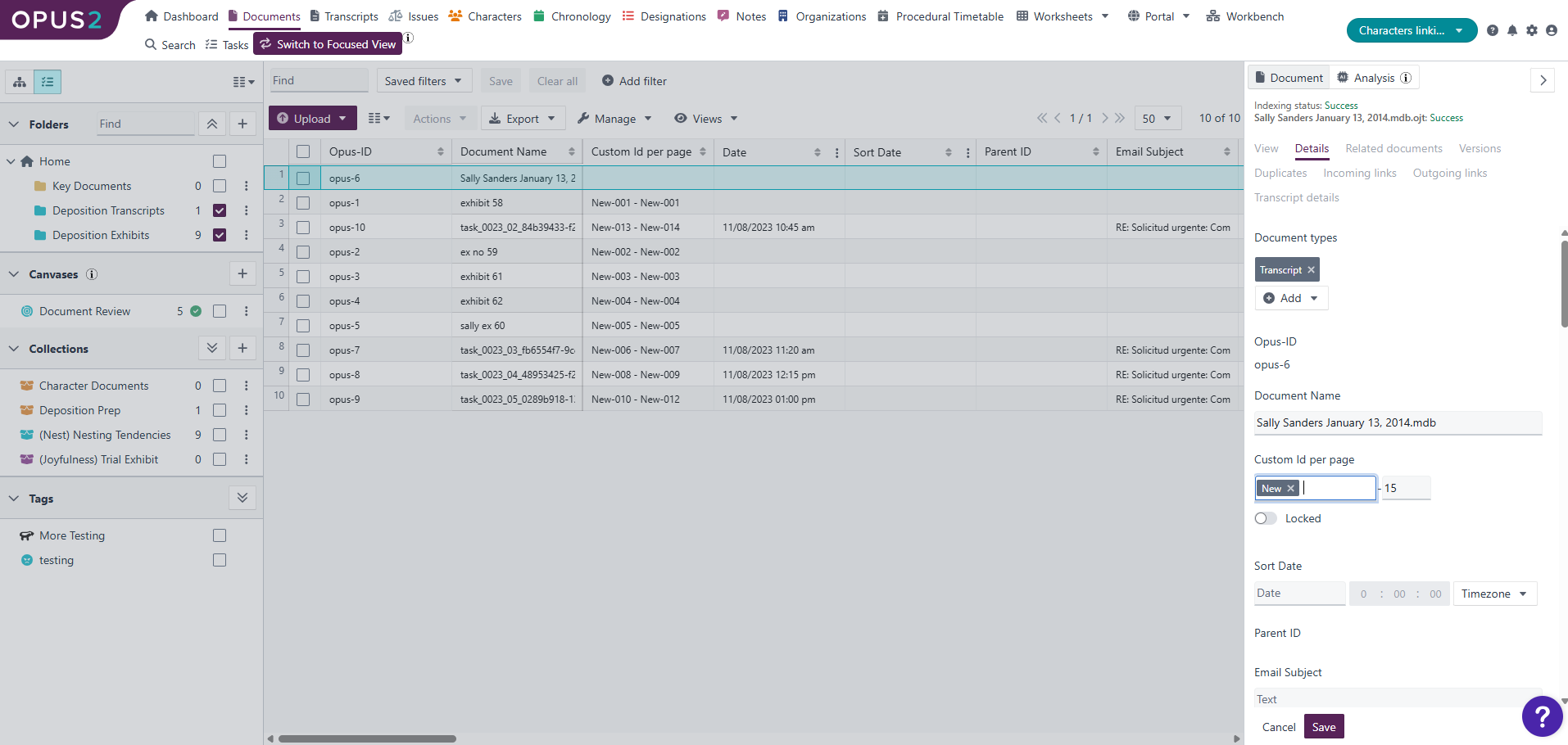
- Alternatively, select Actions > Apply metadata and follow the steps above.
Applying the custom ID field to stamps
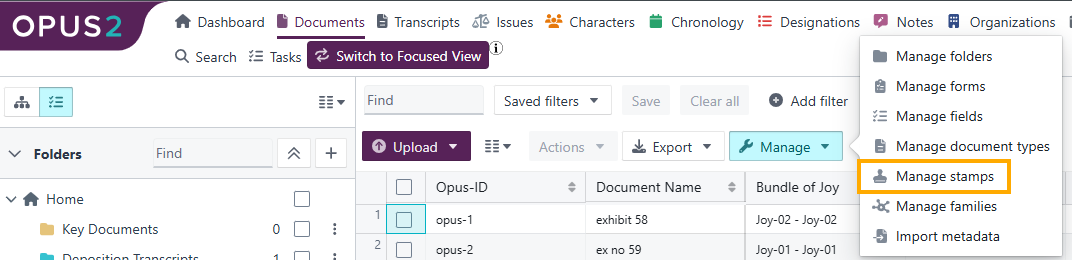
- From the Documents page, select Manage > Manage stamps.
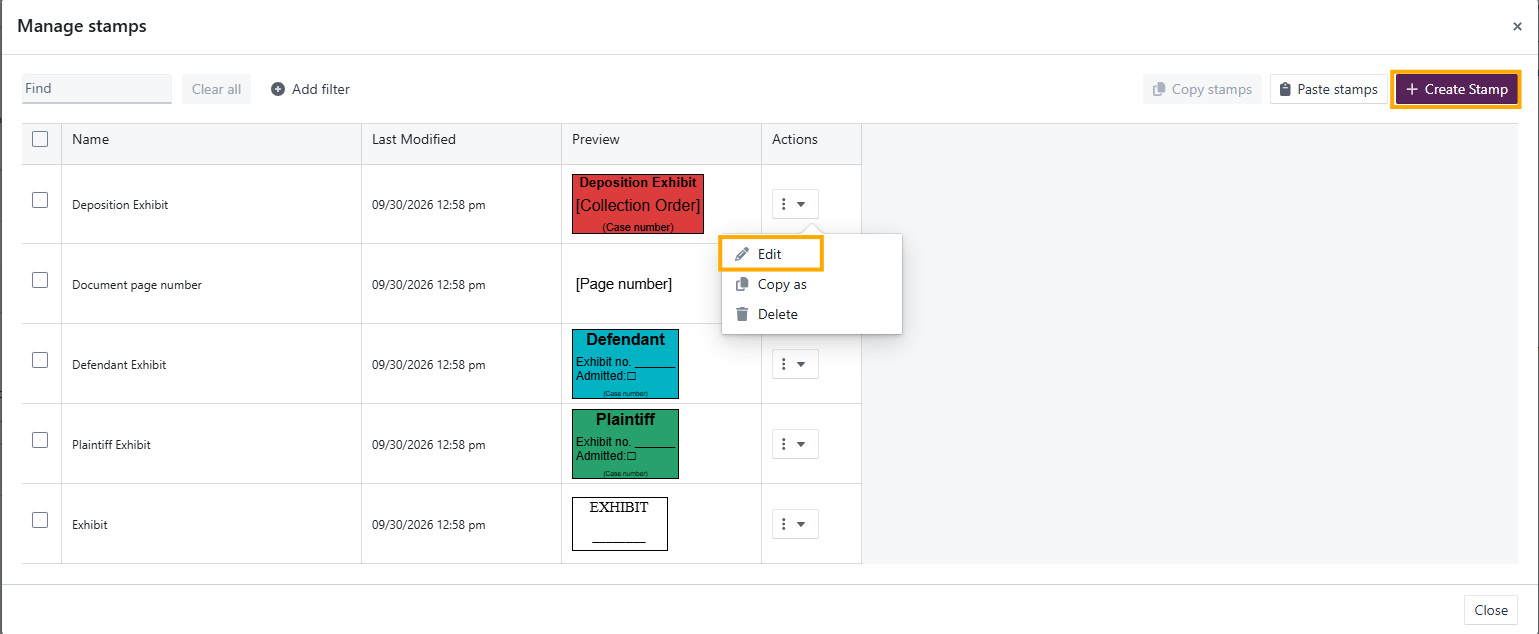
- In the Manage stamps dialog, select an existing stamp to edit or select Create stamp.
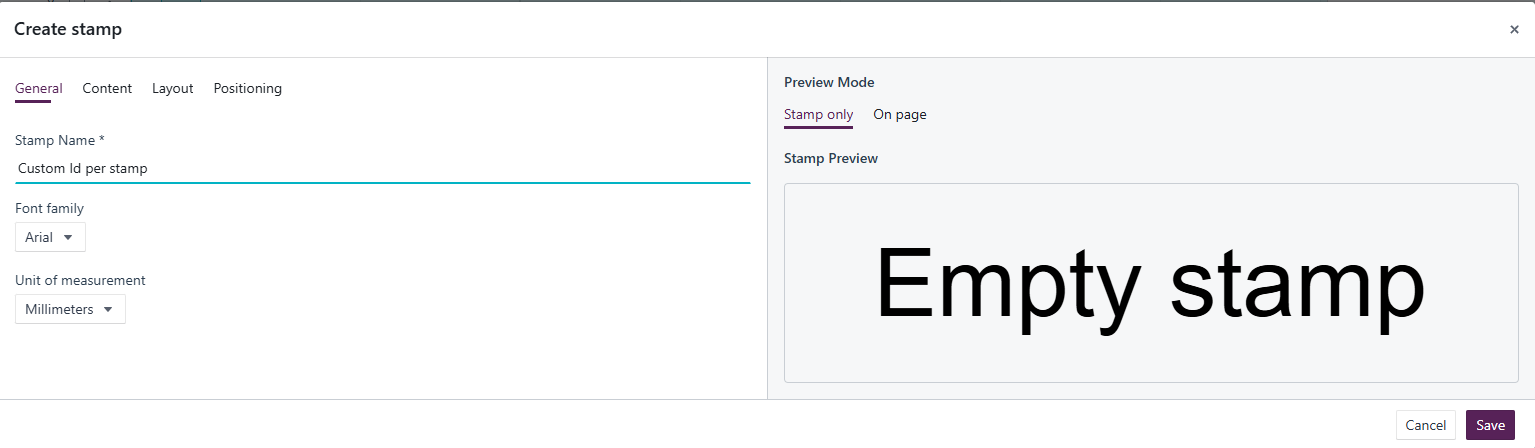
- In the Create stamp dialog, enter a name for the stamp.
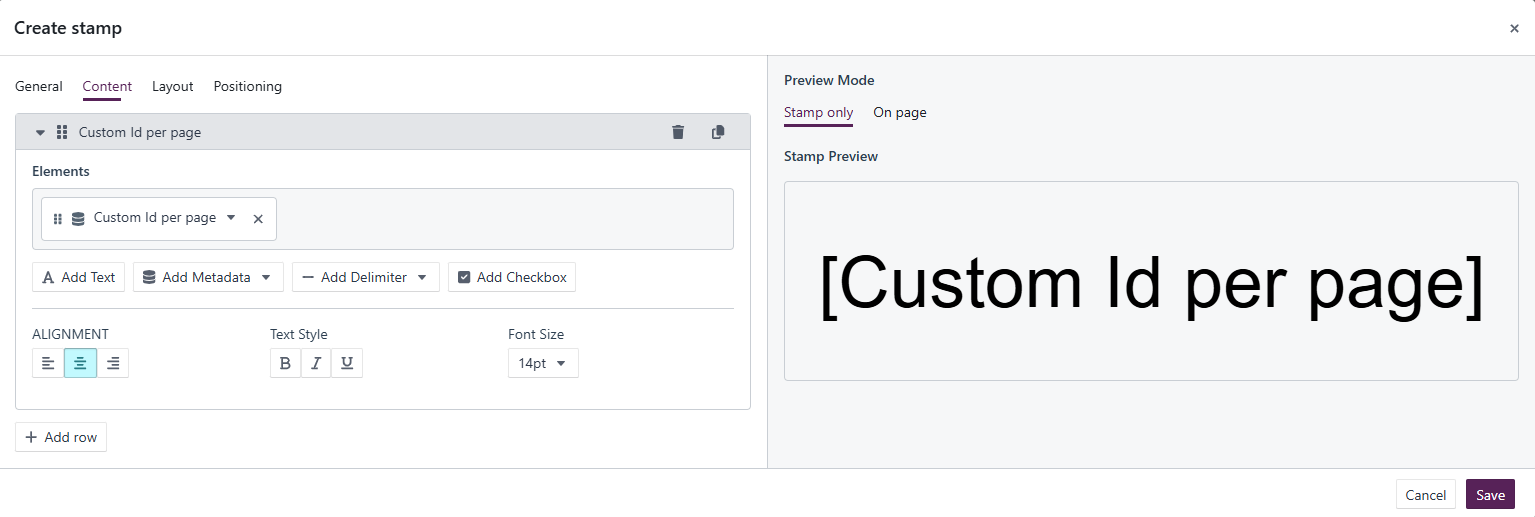
- Move to the Content tab and Add row.

- Select Add Metadata and select your custom Id field.
- Finish creating your stamp on the Layout and Positioning tabs, then select Save.
- To apply the stamp to a document, select the document, then select Actions > Manage applied stamps.
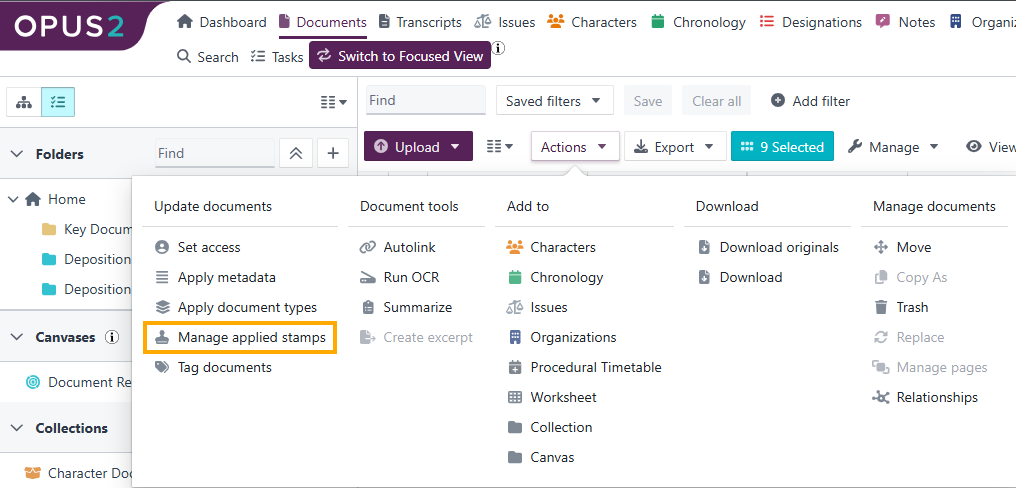
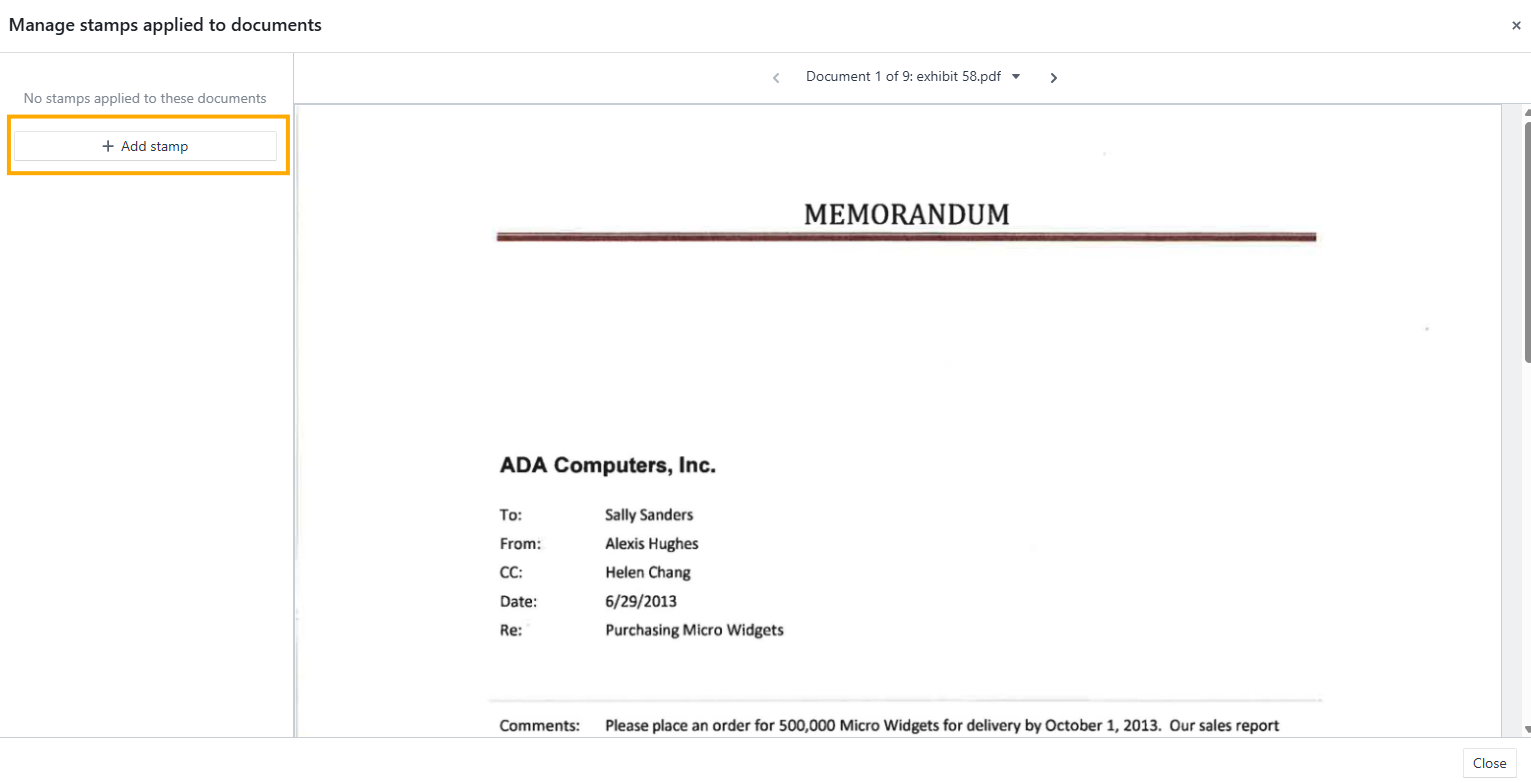
- From the Manage stamps applied to documents dialog, select your stamp from the Add stamp button
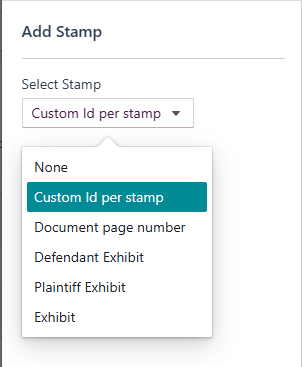
- Select the stamp from the dropdown list.
- Select Add.
A confirmation message confirms the stamp has been applied. The custom ID value is visible on the document when viewed in the Manage stamps applied to documents dialog.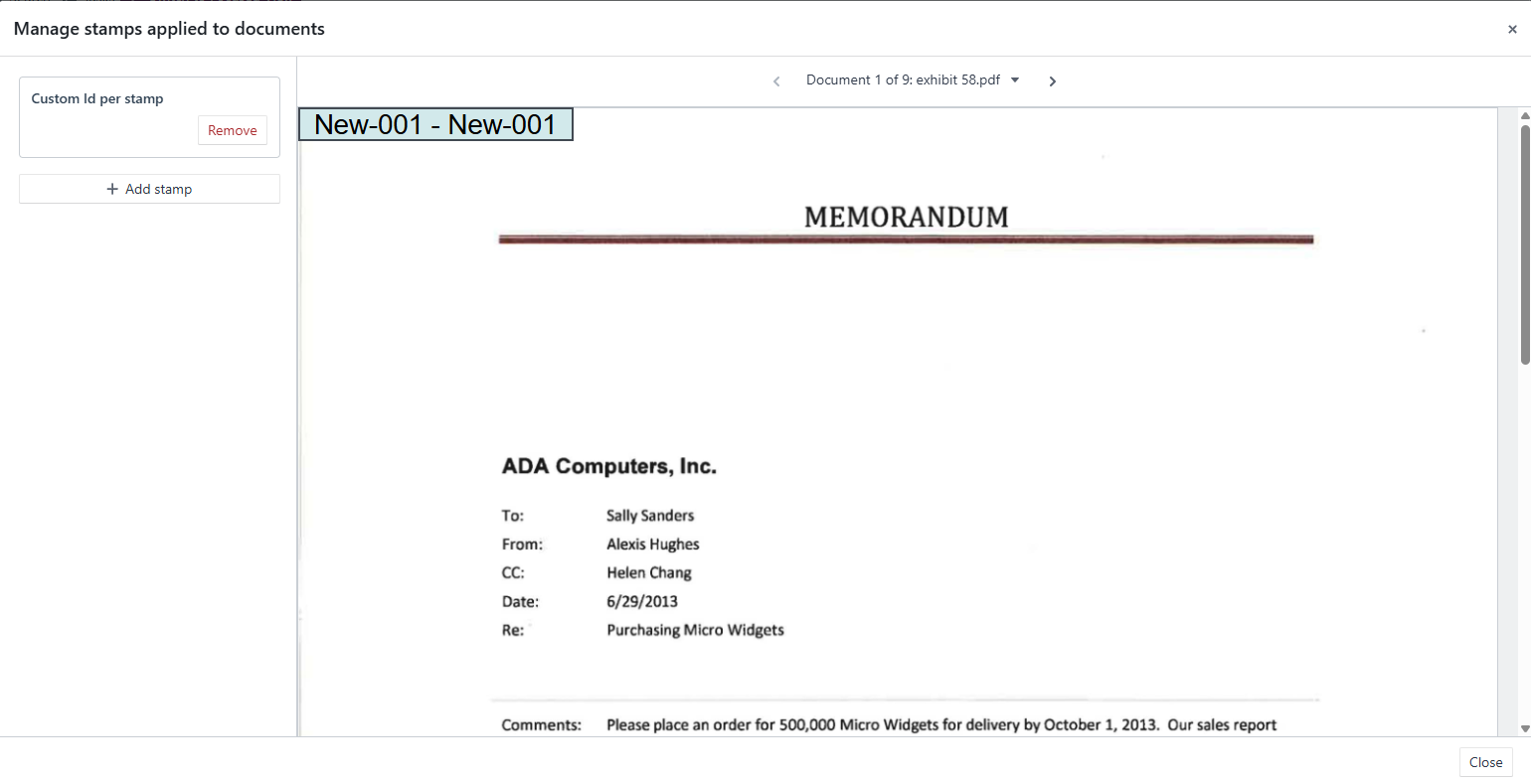
Note: The steps above apply to standard stamps. If your project uses Legacy stamps, the process for creating and applying stamps will differ. See Adding and editing legacy stamps for Legacy stamp guidance.
Related links
Related documentation
Opus 2 has help information accessible within the application; click the question mark and then select Documentation in the upper-right area of the platform. You can also access the documentation at: Opus 2 Support.
How to contact us
To contact us about the documentation, or if you have any other questions or issues about Opus 2 solutions, contact Opus 2 Platform Support by emailing Opus 2 Platform Support.