
| Minimum Software Version | 8.18.10 |
| Solution(s) | Hearings ⨉ Cases International ✓ Cases US ✓ Institutions ⨉ Counsel ✓ |
Explains how to delete documents and transcripts in Opus 2, including the two-step deletion process, restoring files from the Trash, and permanently removing files from the platform.
When a document or transcript is deleted in Opus 2, it is not immediately removed from the system. Deleted files are first moved to the Trash, where they can be restored if needed. Files are only permanently removed once they are deleted from the Trash. This two-step process helps prevent accidental data loss.
Note: Permanently deleting a file from the Trash removes it from the case, but the file will still appear in the Files menu and continue to count towards storage usage. To remove a file entirely from the platform and usage counts, it must also be deleted from the Files menu.
Deleting a document or transcript
- Navigate to the Documents tab and locate the document or transcript to remove. Use the Find, Filter, or Search tools to narrow results if working with a large document set.
- Select one or more files using the tick boxes on the left-hand side of the table.
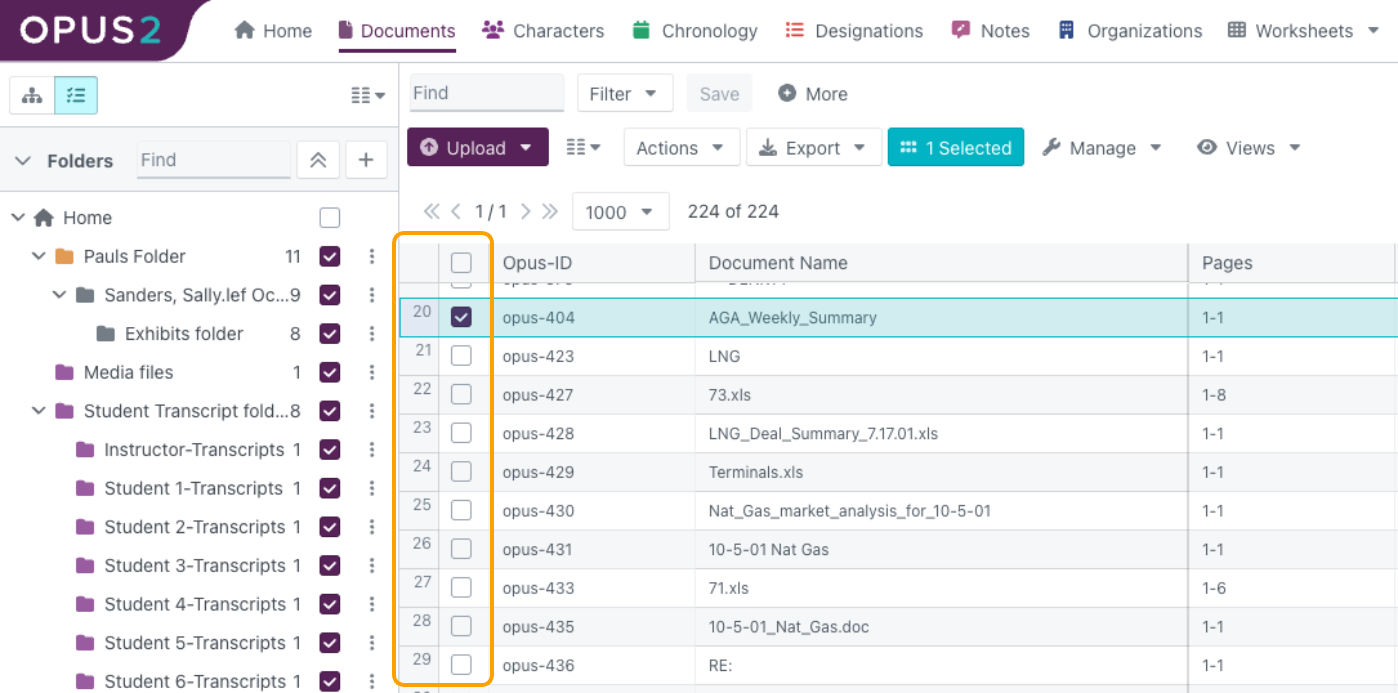
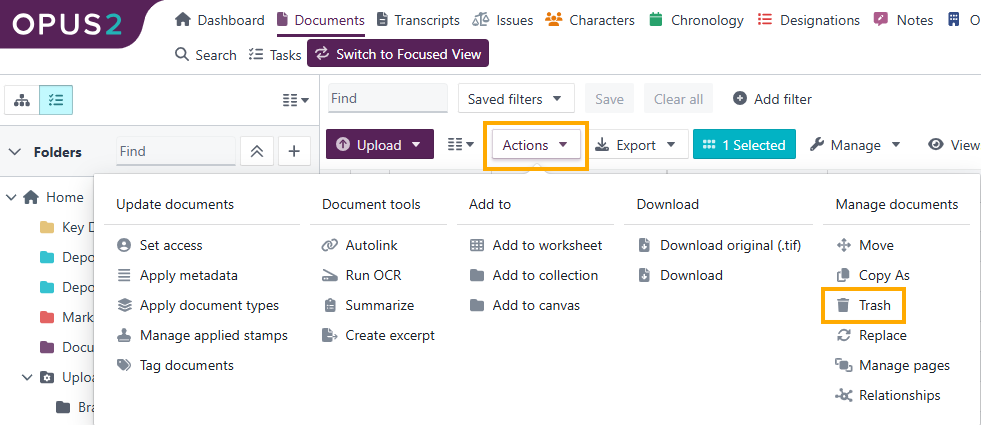
- Select the Actions dropdown menu at the top of the Documents page.
- Select Trash.
- Confirm by selecting Yes, move to trash.
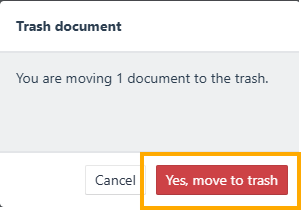
The selected files are removed from the Documents tab and moved to the Trash, where they can be restored if required.
Restoring or permanently deleting files from the Trash
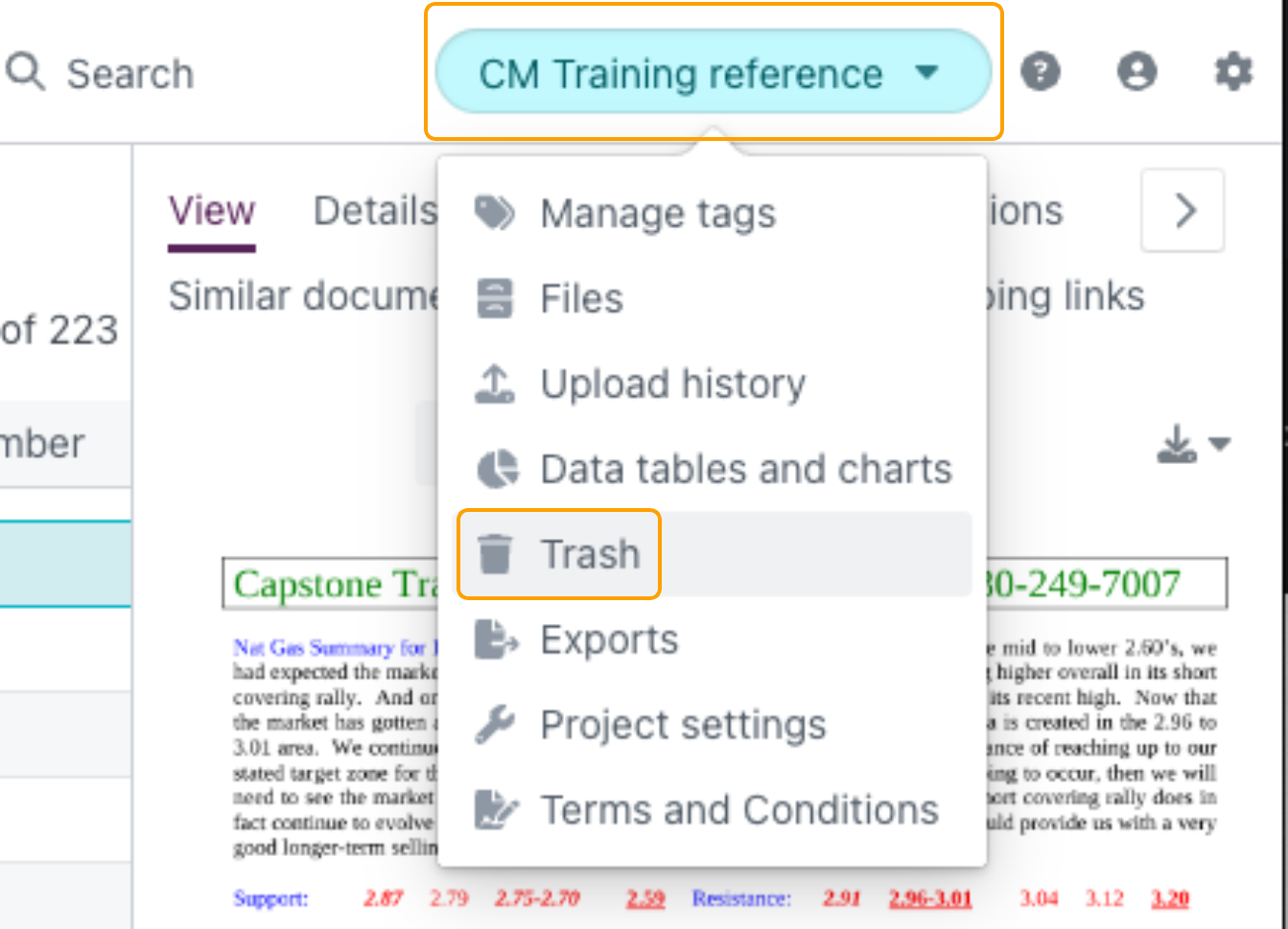
- Select the Project button and select Trash from the dropdown menu.
- Select the files to manage using the tick boxes on the left-hand side.
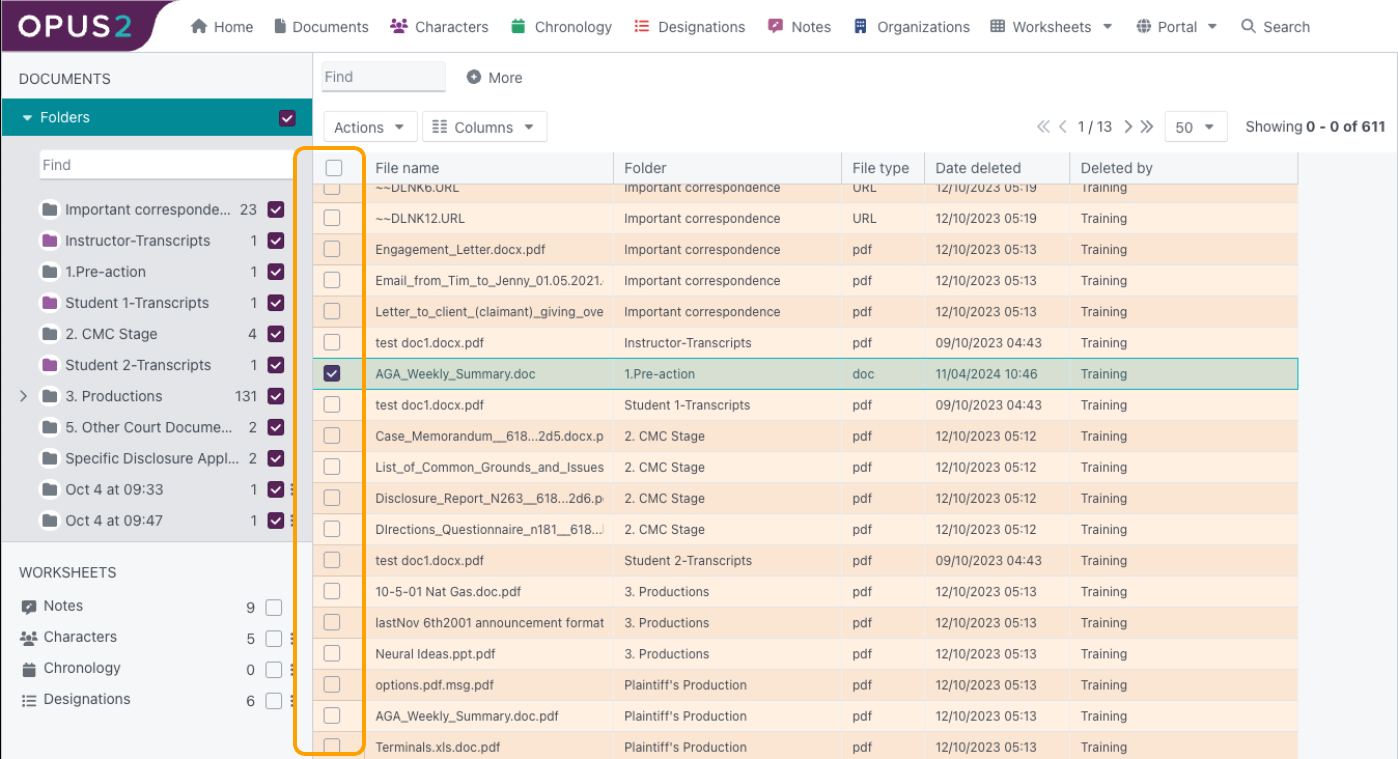
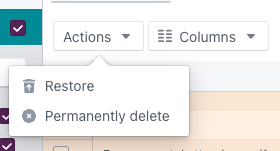
- Select the Actions menu and choose one of the following:
- Restore – Returns the files to the Documents tab.
- Permanently delete – Fully removes the files from the case. This action cannot be undone.
Note: Permanently deleting a file from the Trash removes it from the case, but the file will still appear in the Files menu and count towards storage usage. Follow the steps below to remove it entirely.
Removing a file from the Files menu
To remove a permanently deleted file from the platform and usage counts entirely:
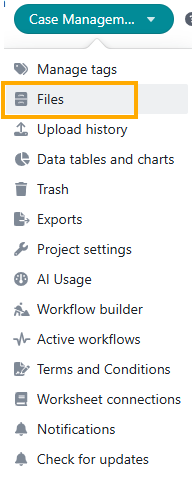
- Navigate to the Files menu.
- Locate the file — searching by filename is the most reliable method.
- Select the file using the tick box.
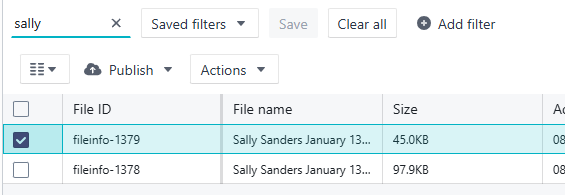
- Select Actions > Delete.
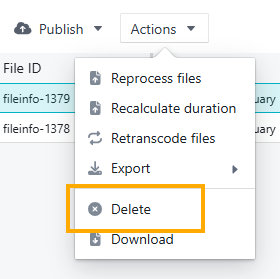
Once deleted from the Files menu, the file will no longer count towards storage usage.
Examples
Accidental deletion: If a document or transcript has been moved to the Trash by mistake, open the Trash, select the file, and select Restore from the Actions menu. The file returns to the Documents tab immediately.
Permanent removal: If a file is no longer needed and should be fully removed, delete it from the Trash and then delete it from the Files menu. This removes it from the case and from the platform storage count entirely.
Related links
Related documentation
Opus 2 has help information accessible within the application; click the question mark and then select Documentation in the upper-right area of the platform. You can also access the documentation at: Opus 2 Support.
How to contact us
To contact us about the documentation, or if you have any other questions or issues about Opus 2 solutions, contact Opus 2 Platform Support by emailing Opus 2 Platform Support.