
| Minimum Software Version | 8.18.10 |
| Solution(s) | Hearings ⨉ Cases International ✓ Cases US ✓ Institutions ⨉ Counsel ✓ |
Explains how to view a document in Opus 2 using the document preview and Document Viewer, and outlines the key panels and tools available when reviewing a document.
The Opus 2 Document Viewer allows users to open, read, and interact with documents directly from the Documents page. From the viewer, users can navigate between pages, search within the document, apply annotations and actions, and review associated notes. Documents are initially previewed in the right-hand panel, and selected pages can be opened in the full Document Viewer, which defaults to opening in a new browser tab for focused review.
Viewing a document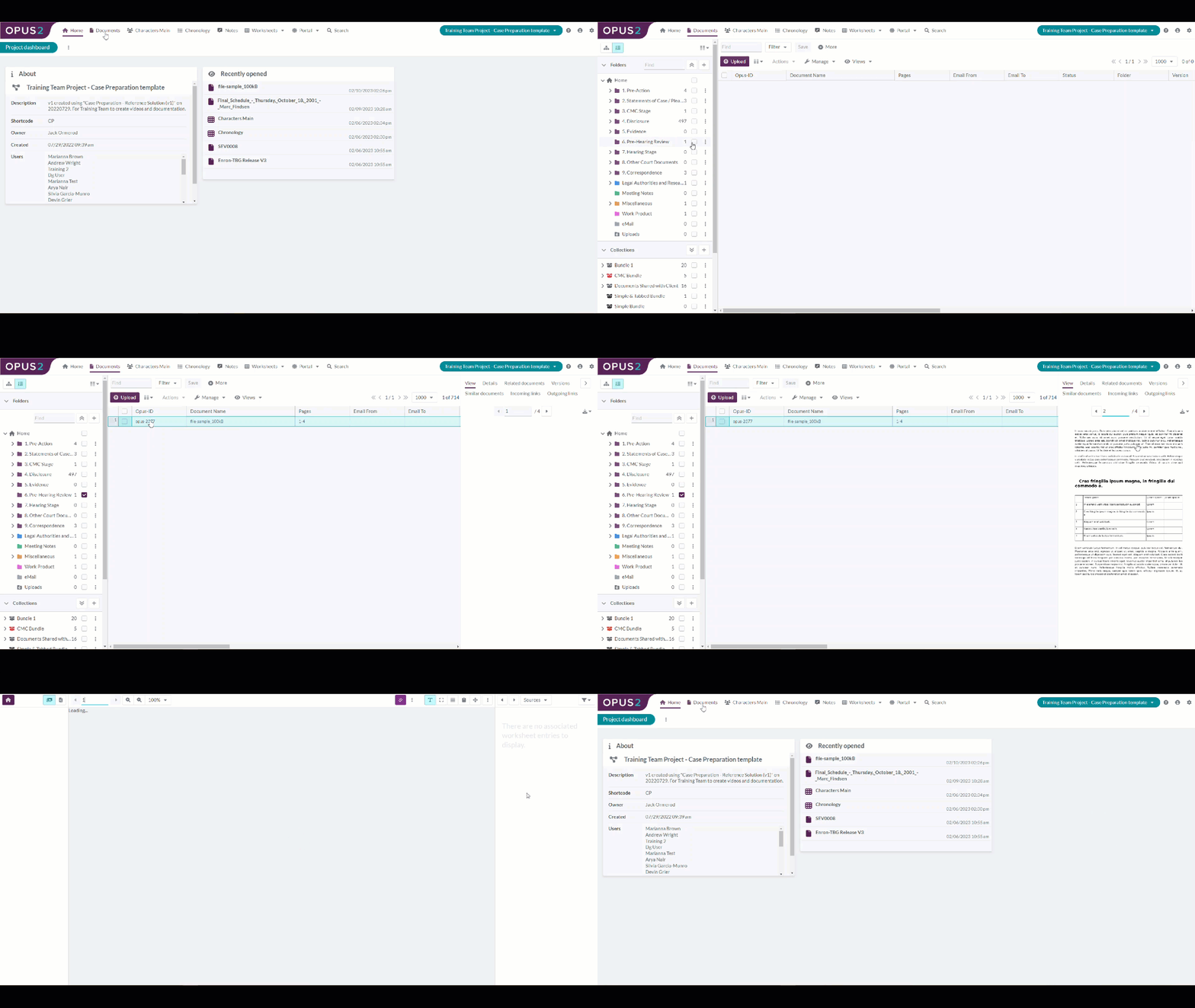
- Navigate to the Documents page.
- Select the document you want to view. If needed, use the Find feature to locate the document.
- The document preview is displayed in the right-hand panel.
- Use the page numbers at the top of the preview to navigate to the desired page.
- Select the page preview to open the document in the Document Viewer.
By default, the Document Viewer opens in a new tab, allowing uninterrupted document review.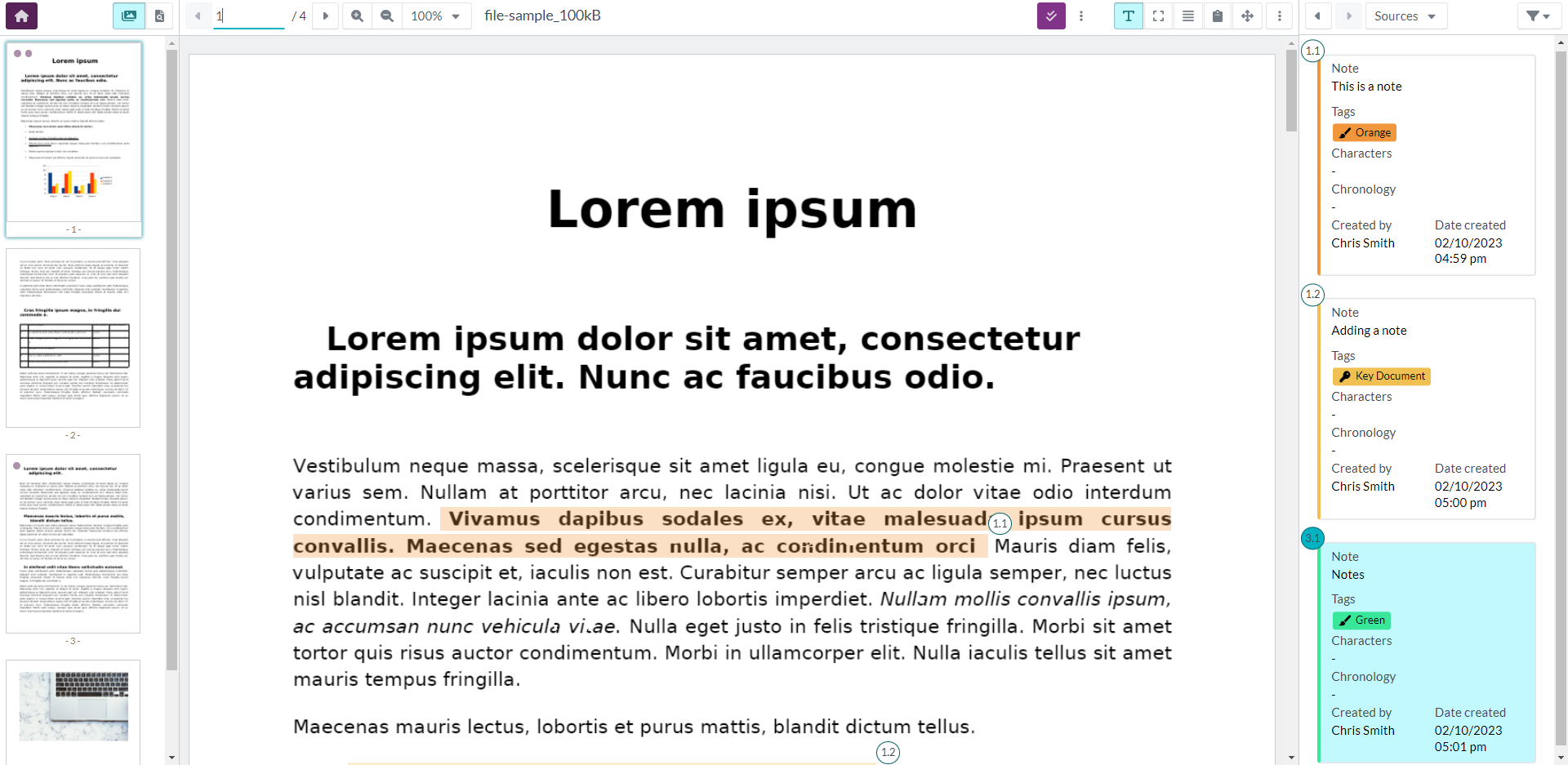
Example: Select a witness statement from the Documents table, navigate to page 3 in the preview, and select the preview to open the document at that page in the viewer.
Understanding the Document Viewer
The Document Viewer has three panels, each providing different functionality.
Left-hand panel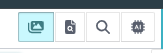
The left-hand panel helps users navigate and locate content within the document. It contains four icons:
Thumbnails: Displays all pages of the document as scrollable thumbnails. Selecting a thumbnail opens the corresponding page.
Word index: Provides an alphabetical list of words contained in the document. Selecting a word shows all instances where it appears; selecting an instance opens the document at the relevant page with the word highlighted.
Search: Allows users to search for specific text within the document. Results are highlighted in the document and can be navigated sequentially.
AI: Provides access to AI Analysis tools for the document, including summary, query, and entity extraction. See Accessing AI Analysis for more information.
Centre panel
The centre panel displays the full document for reading, review, and interaction. The toolbar at the top provides key controls:
- Left side – Page navigation controls, zoom in, and zoom out.

- Right side – Tools to interact with the document, including quick links, selection tools, and options to apply preset actions and annotations to selected text or regions.

Right-hand panel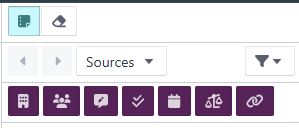
The right-hand panel displays all saved notes associated with the document. Users can filter or reduce the number of visible notes. Selecting a note opens the document at the relevant page and highlights the associated text or region.
Example: Selecting a note in the Notes panel opens the document directly at the referenced paragraph.
Related links
- How to find documents using folders
- How to add a note on an area of a document
- Creating document and text-level links
Related documentation
Opus 2 has help information accessible within the application; click the question mark and then select Documentation in the upper-right area of the platform. You can also access the documentation at: Opus 2 Support.
How to contact us
To contact us about the documentation, or if you have any other questions or issues about Opus 2 solutions, contact Opus 2 Platform Support by emailing Opus 2 Platform Support.