
| Minimum Software Version | 8.18.10 |
| Solution(s) | Cases International ✓ Cases US ✓ Institutions ⨉ Counsel ✓ |
Document metadata in the Opus 2 platform reflects key information about documents and their current state. Users with the appropriate permissions can update user-generated metadata fields in three ways: simple edits for individual documents, bulk edits for multiple documents sharing the same values, and imports for large-scale or varied updates.
Metadata falls into two categories: system-generated metadata, which is automatically created and managed by the platform, and user-generated metadata, which consists of configurable fields that users can update. Keeping metadata accurate and consistent across a project makes documents easier to find, filter, and manage. The method you use to update metadata depends on the scale and nature of your changes.
Prerequisites
To update document metadata, you must have the appropriate metadata editing permissions assigned to your account.
Simple edit — update metadata on a single document
Use simple editing when updating metadata for one document at a time.
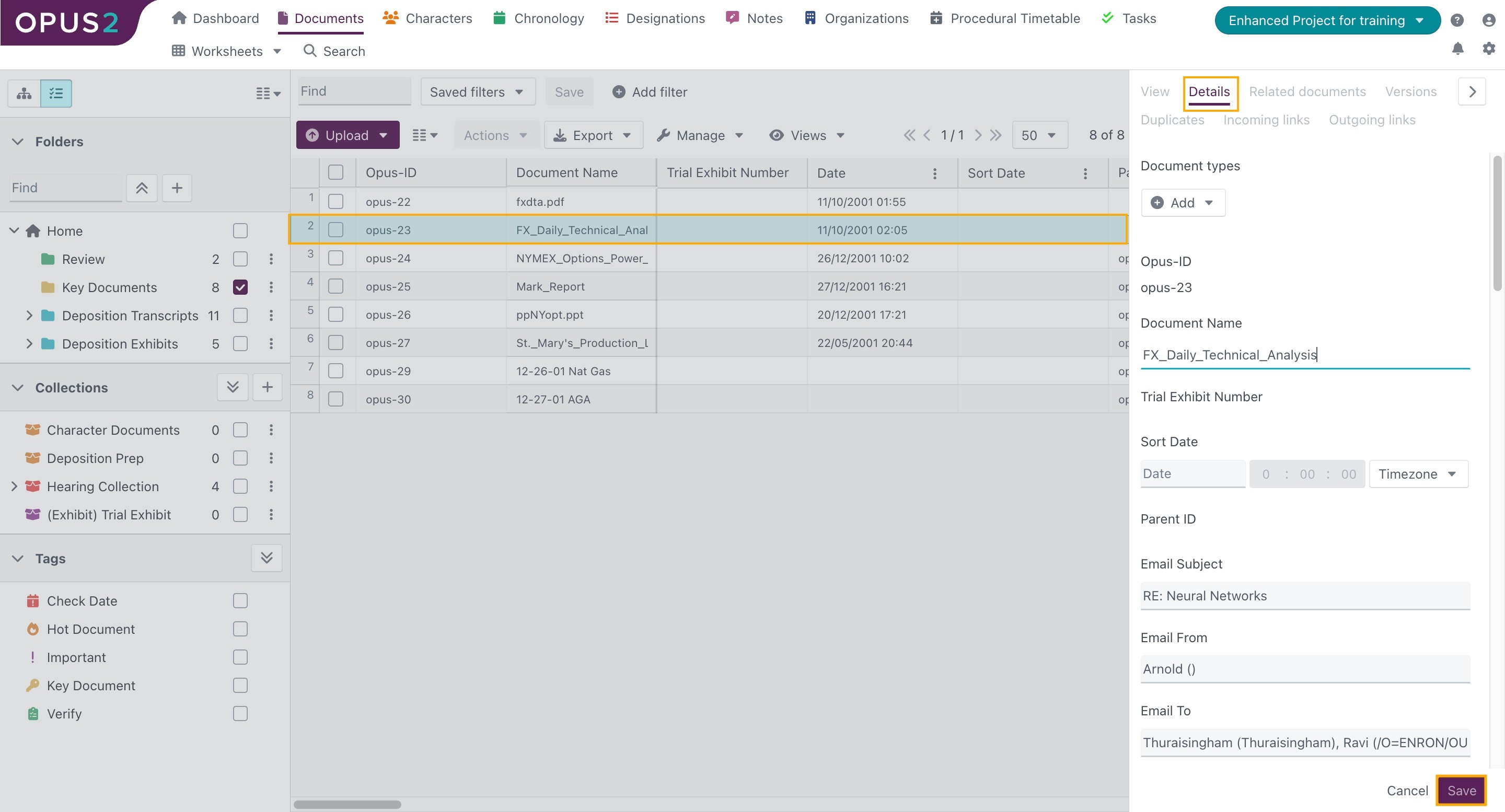
- Click a document row to select it.
- The Details panel opens on the right-hand side.
- Navigate to the Details tab.
- Click anywhere in the form to make the user-generated metadata fields editable.
- Update the required fields.
- Click Save.
Bulk edit — update identical metadata across multiple documents
Use bulk editing when the same metadata values need to be applied to several documents at once.
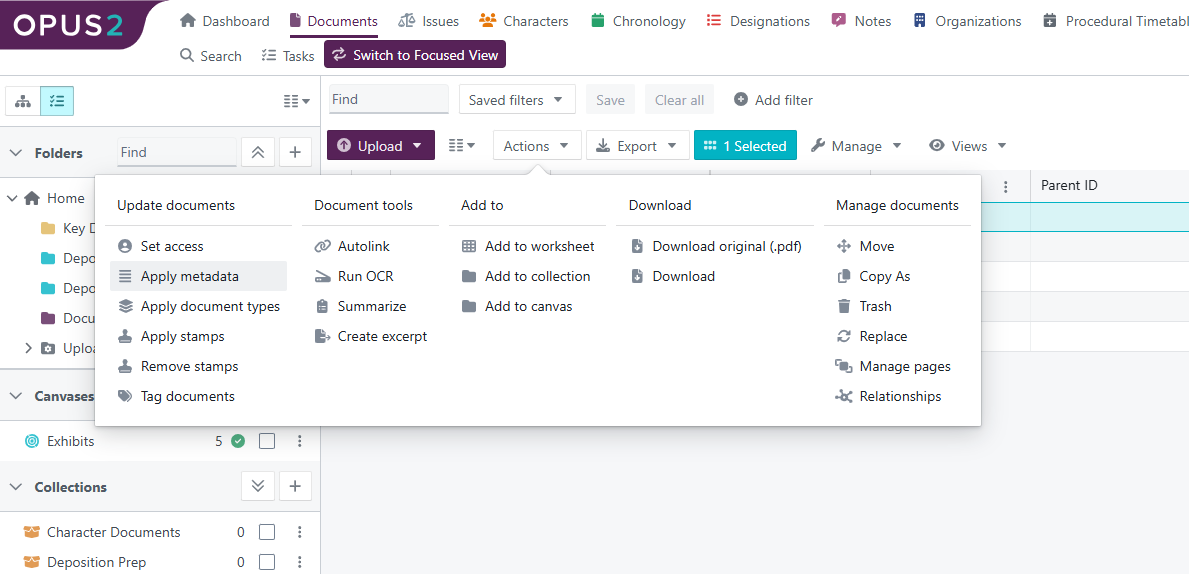
- Select multiple documents using the checkboxes.
- Click the Actions dropdown.
- Select Apply metadata.
- In the Apply document metadata dialog:
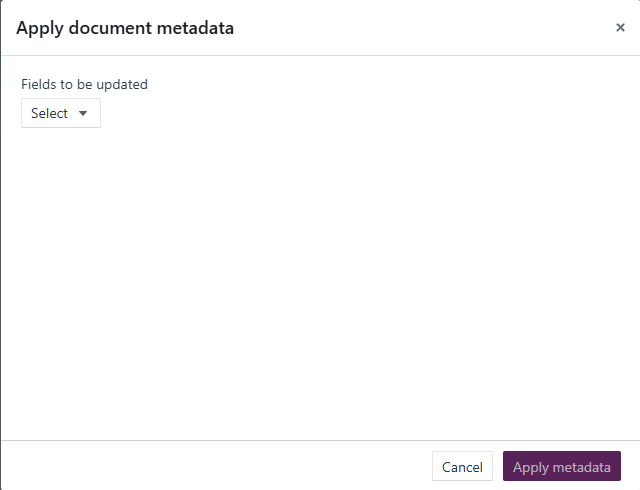
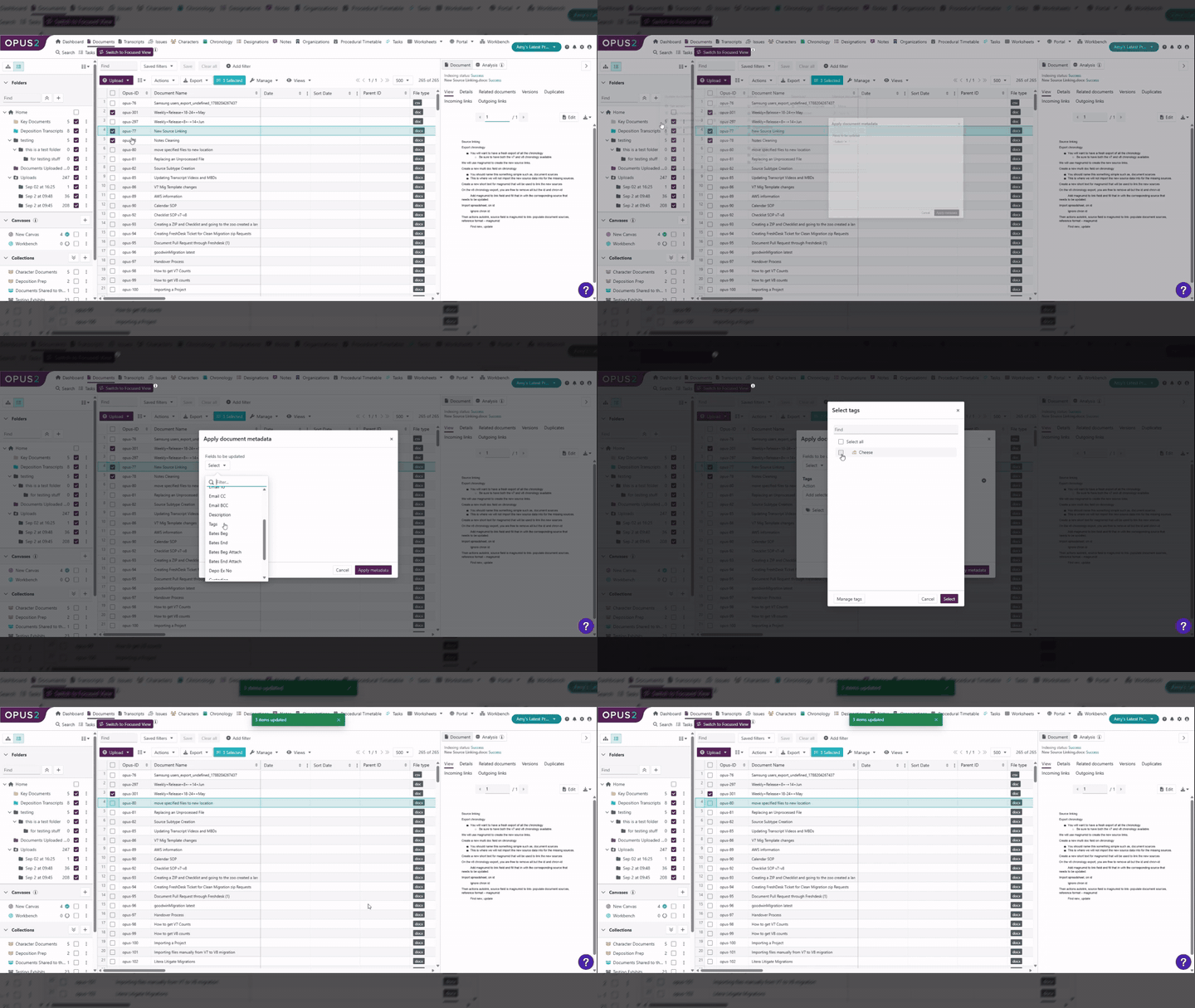
- Open Fields to be updated.
- Select the required metadata field.
- Repeat to add further fields as needed.
- Enter the metadata values.
- Click Apply metadata.
- A confirmation message confirms the update.
Import — update metadata across multiple documents at scale
Use import when applying varied metadata values across many documents. Accepted file types: .xls, .xlsx, .csv.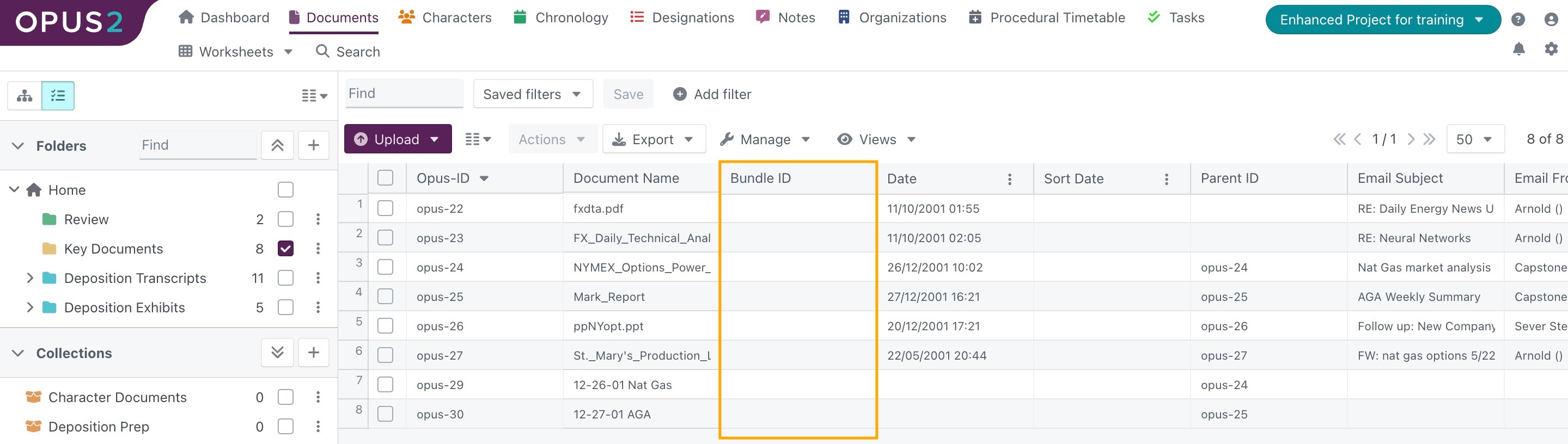
Export the metadata file
- Click the Export dropdown.
- Select Metadata as spreadsheet.
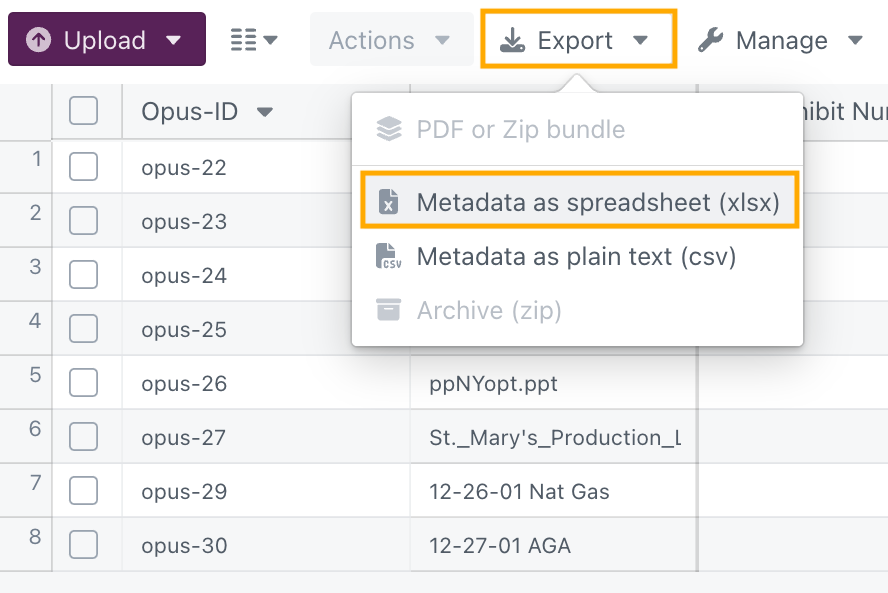
- Open the downloaded file.
- Update the required metadata columns.
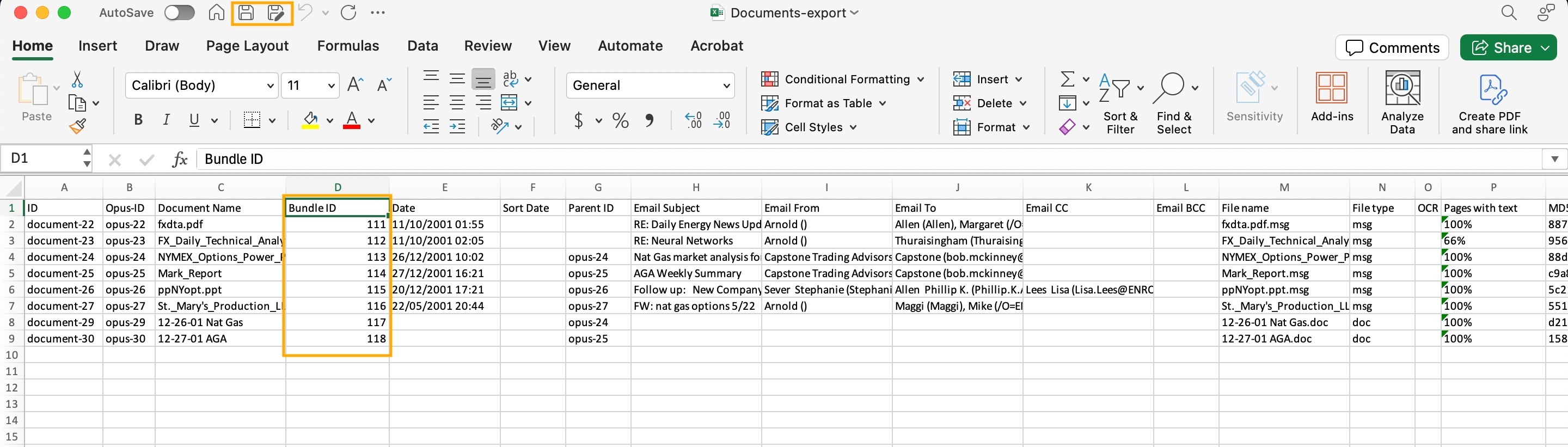
- Save the file.
Import the updated file
- Click the Manage dropdown.
- Select Import metadata.
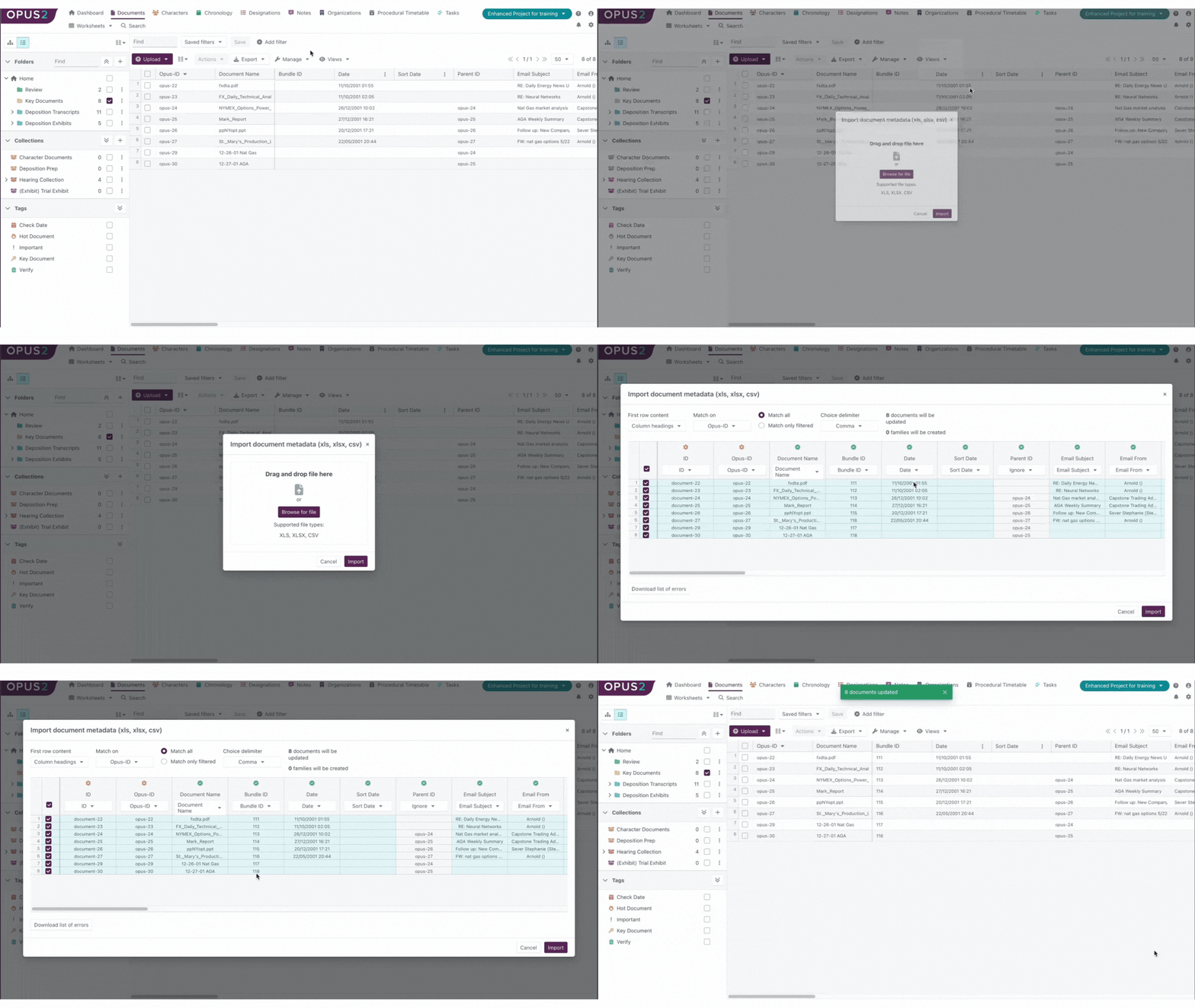
- Drag and drop the updated file into the upload area, or browse to select it.
- Verify that each spreadsheet column is mapped to the correct metadata field.
- Click Import.
Metadata updates are applied once the import completes.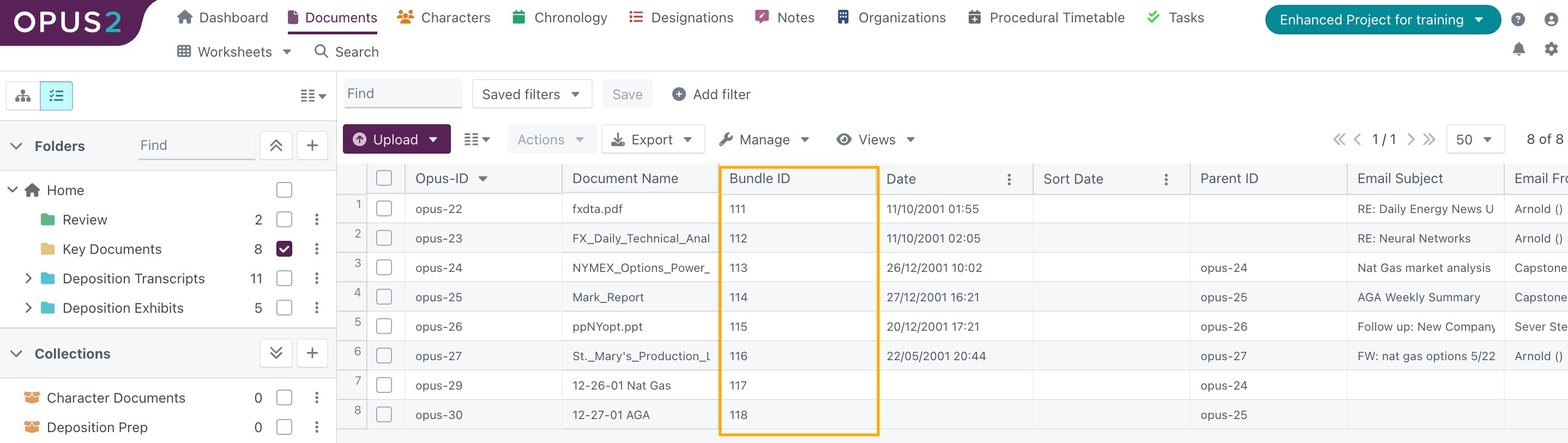
Import options explained
| Option | Description |
|---|---|
| First row content | Should remain set to Column headings. |
| Match on | The column used to match spreadsheet rows to documents. |
| Match all | Matches across all documents in the project. |
| Match only filtered | Recommended when updating a small subset of documents, or when filenames may not be unique. |
Handling mismatched metadata
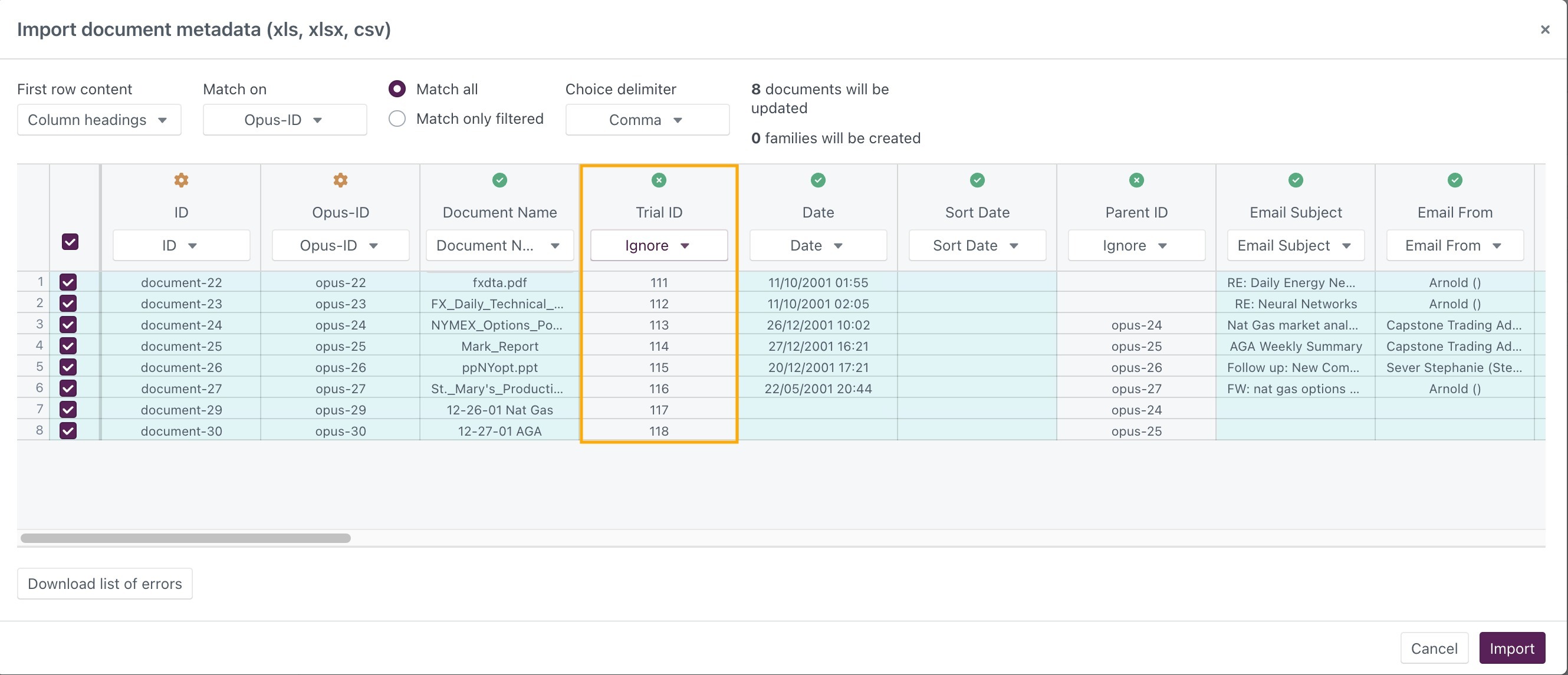
If a spreadsheet column does not match a recognised metadata field, the mapping defaults to Ignore. To correct this:
- Click the dropdown beneath the unrecognised column.
- Select the correct metadata field.
- Click Import.
Related links
Related documentation
Opus 2 has help information accessible within the application; click the question mark and then select Documentation in the upper-right area of the platform. You can also access the documentation at: Opus 2 Support.
How to contact us
To contact us about the documentation, or if you have any other questions or issues about Opus 2 solutions, contact Opus 2 Platform Support by emailing Opus 2 Platform Support.