
| Minimum Software Version | 8.18.10 |
| Solution(s) | Cases International ✓ Cases US ✓ Institutions ⨉ Counsel ✓ |
Explains how to add and configure the Folder component in the Portal Builder, including folder preparation, visible columns, upload functionality, and subfolder creation.
The Folder component allows portal users to view and interact with shared document folders from the platform in a structured, searchable table format. Administrators control which folder is shared, what metadata columns are visible, and what actions portal users can perform, such as uploading documents or creating subfolders.
Only folders that already exist in the platform can be selected for display. This component maintains alignment with the folder structure in the platform, meaning any subfolders created by portal users will affect the folder structure in the platform.
Preparing folders in the platform
Before configuring the Folder component, ensure the required folder or folders are already created in the platform's folder section and confirmed as available for sharing.
Important: Only folders that already exist in the platform can be selected for display.
Adding a Folder component
- Open the Portal Builder.
- Add the Folder component to the desired location on the page.
- Open the Properties tab to configure settings.
Configuring Folder properties
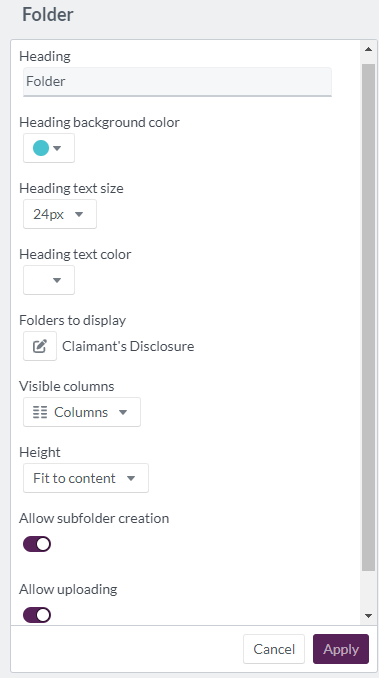
Configure the following options in the Properties tab:
| Option | Description |
|---|---|
| Heading | Header text for the Folder component (maximum 100 characters). |
| Heading background colour | Select a colour using the colour wheel, hexadecimal, or RGB code. |
| Heading text size | Set size between 12px and 72px. |
| Heading text colour | Choose a colour using the colour wheel, hexadecimal, or RGB code. |
| Folder to display | Select the folder to share with portal users (must already exist in the platform). |
| Visible columns | Select the metadata fields to display as columns in the portal. All metadata columns are available for selection. Column widths can be adjusted as needed — the default size is 200px. If adjustment is required, a width between 50px and 400px is recommended. The value should be typed manually; to clear it, delete the number from the field. |
| Height | Set the display area to fit to content, at least half a page, or at least a full page. |
| Allow subfolder creation | Allows portal users to create subfolders within the shared folder. Note that subfolders created by portal users affect the folder structure in the platform. |
| Allow uploading | Allows portal users to upload documents directly into the shared folder. |
Example: Configure a Folder component titled Client Documents with visible metadata such as document name, type, and date uploaded.
How the Folder component appears to portal users
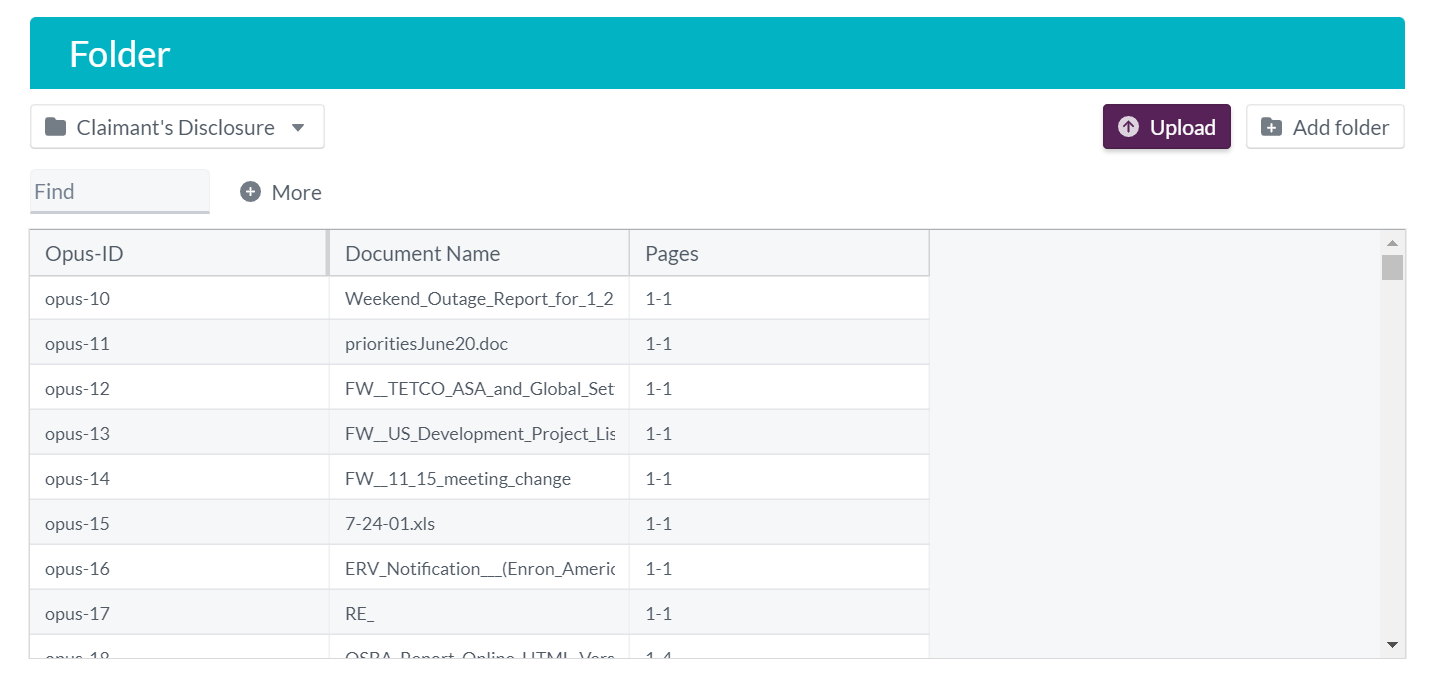
When displayed on the portal, the heading appears at the top, and the folder name appears directly beneath it. A table lists the documents stored in the shared folder, with the metadata fields visible as columns based on the configuration set by the administrator. The Find option allows portal users to search documents using metadata, and More applies filters for more precise navigation.
Upload functionality
If Allow uploading is enabled, an Upload button appears above the document table. Selecting it opens the Upload Document dialog, which displays the destination folder. Portal users can: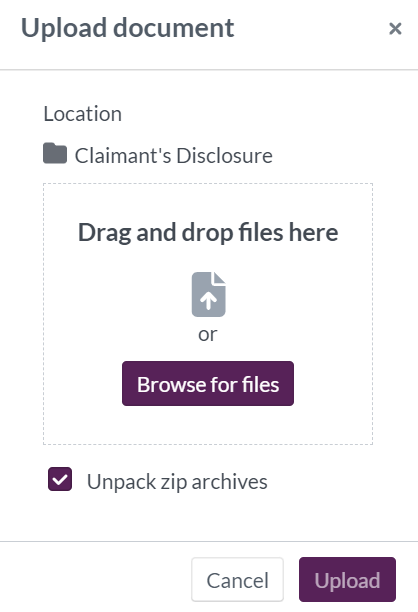
- Drag and drop files.
- Browse their device to select files.
- Enable Unpack zip archives when uploading multiple documents in a compressed file.
Uploaded documents are stored directly in the shared folder.
Subfolder creation functionality
If Allow subfolder creation is enabled, an Add folder button appears. Selecting it opens a Create Folder dialog where portal users can create new subfolders within the shared folder.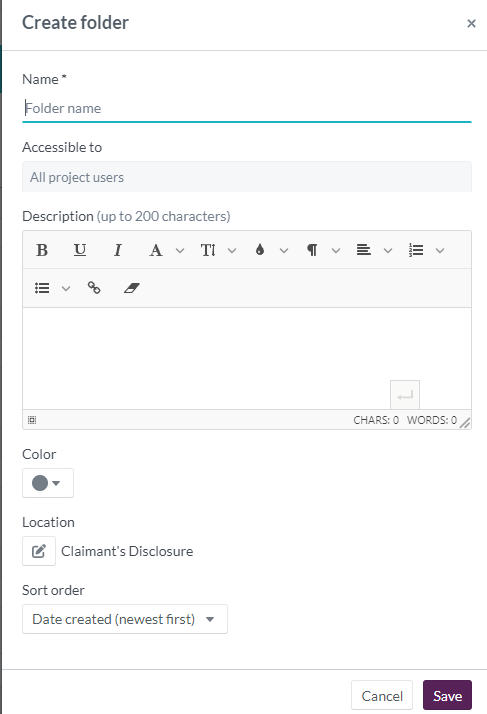
Note: Subfolders created by portal users affect the folder structure in the platform.
Related links
Related documentation
Opus 2 has help information accessible within the application; click the question mark and then select Documentation in the upper-right area of the platform. You can also access the documentation at: Opus 2 Support.
How to contact us
To contact us about the documentation, or if you have any other questions or issues about Opus 2 solutions, contact Opus 2 Platform Support by emailing Opus 2 Platform Support.