
| Minimum Software Version | 8.18.10 |
| Solution(s) | Hearings ⨉ Cases International ✓ Cases US ✓ Institutions ⨉ Counsel ✓ |
The Save Searches feature allows users to store search queries created on the Search page so they can be quickly rerun in the future without rebuilding the search criteria.
Saving a search preserves the search terms and parameters used in a query, making it easy to repeat commonly used searches as a project evolves. This is particularly useful for tracking recurring issues, monitoring new document content, or revisiting key evidence.
Saved searches do not store the list of results—only the query itself. Each time a saved search is loaded and run, it returns up‑to‑date results based on the current project data. Users can also control who has access to a saved search.
Saving a Search
Step 1: Create the Search
- Navigate to the Search page.
- Build the search using the desired terms, parameters, folders, and sorting options.
Step 2: Save the Search
- Click the Save button next to the search bar.
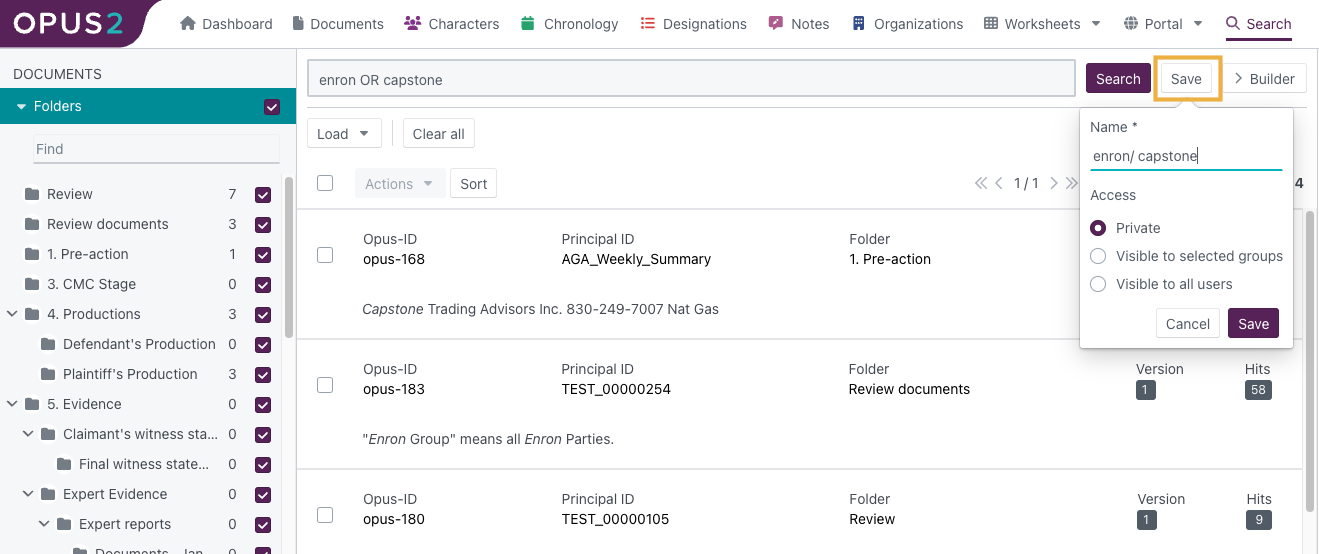
- In the drop‑down dialog:
- Enter a name for the search
- Choose who can access the saved search
Step 3: Confirm Save
- Click Save at the bottom of the dialog.
- A green confirmation message will appear, confirming that the search has been saved.

Example:
Save a search called “Witness Mentions” to quickly rerun it after new transcripts are added to the project.
Recovering a Saved Search
Step 1: Load a Saved Search
- On the Search page, click the Load button.
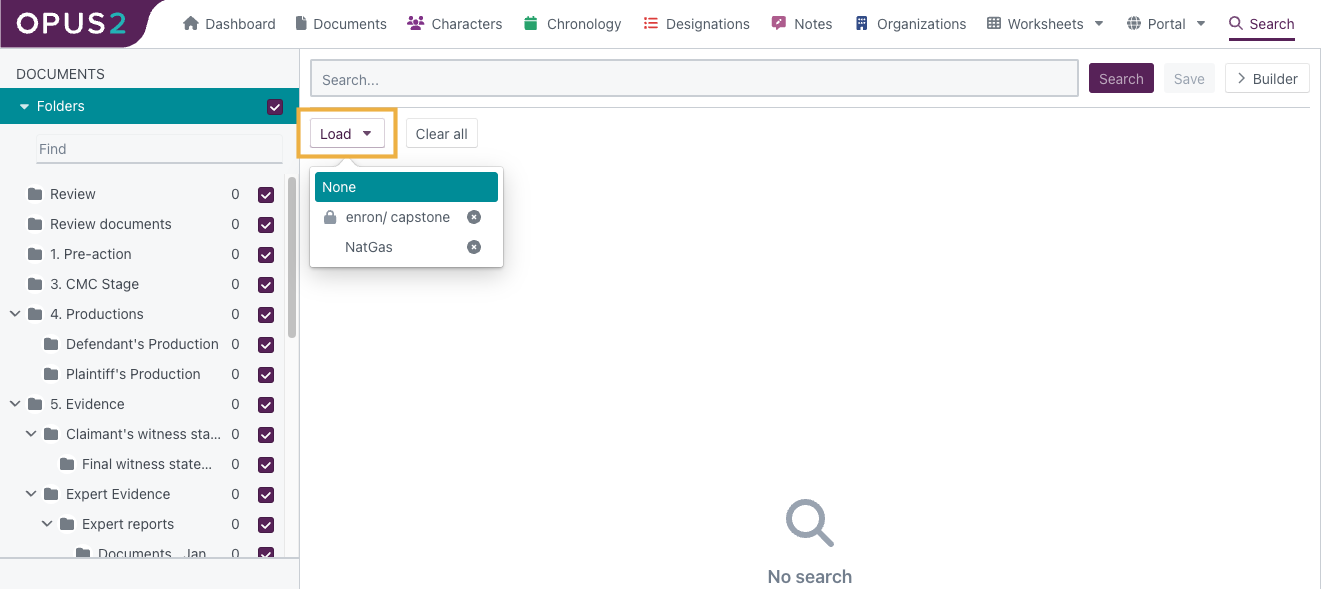
- A list of saved searches appears.
- If many searches exist, use the filter box to find a search by name.
Step 2: Run the Saved Search
- Select the saved search from the list.
- Click Search to run it and view the current results.
Deleting a Saved Search
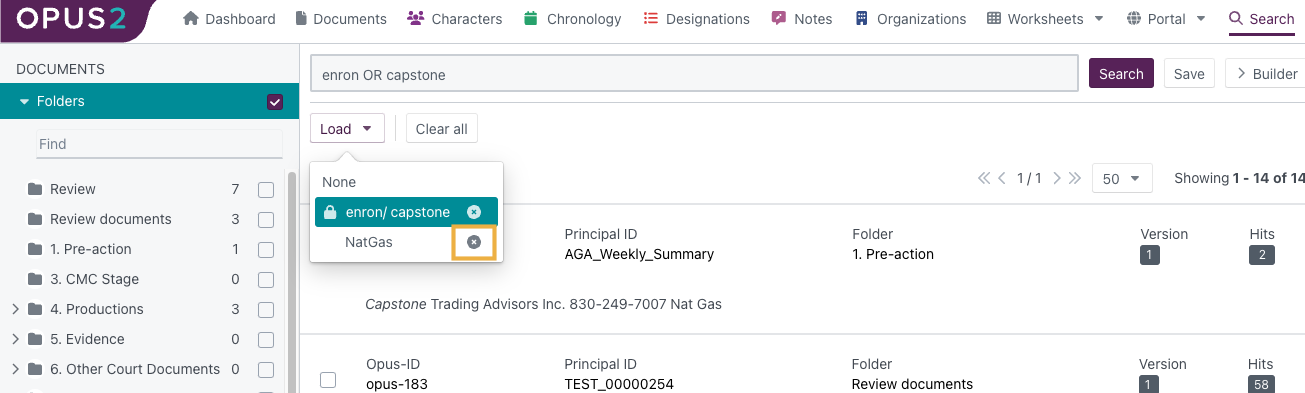
- Saved searches that are no longer needed can be removed by clicking the cross icon next to the search name in the Load drop‑down.
Save frequently used searches to streamline document review, ensure consistency across the team, and quickly identify new or updated content as your project grows.